Nutrition
How Many Calories Should You Eat Per Day? A Simple Guide for Indians
Understand daily calorie needs, the factors that affect them, and how to track your everyday Indian meals without following extreme diets.
NourishCal · Oct 23, 2026 · 13 min read
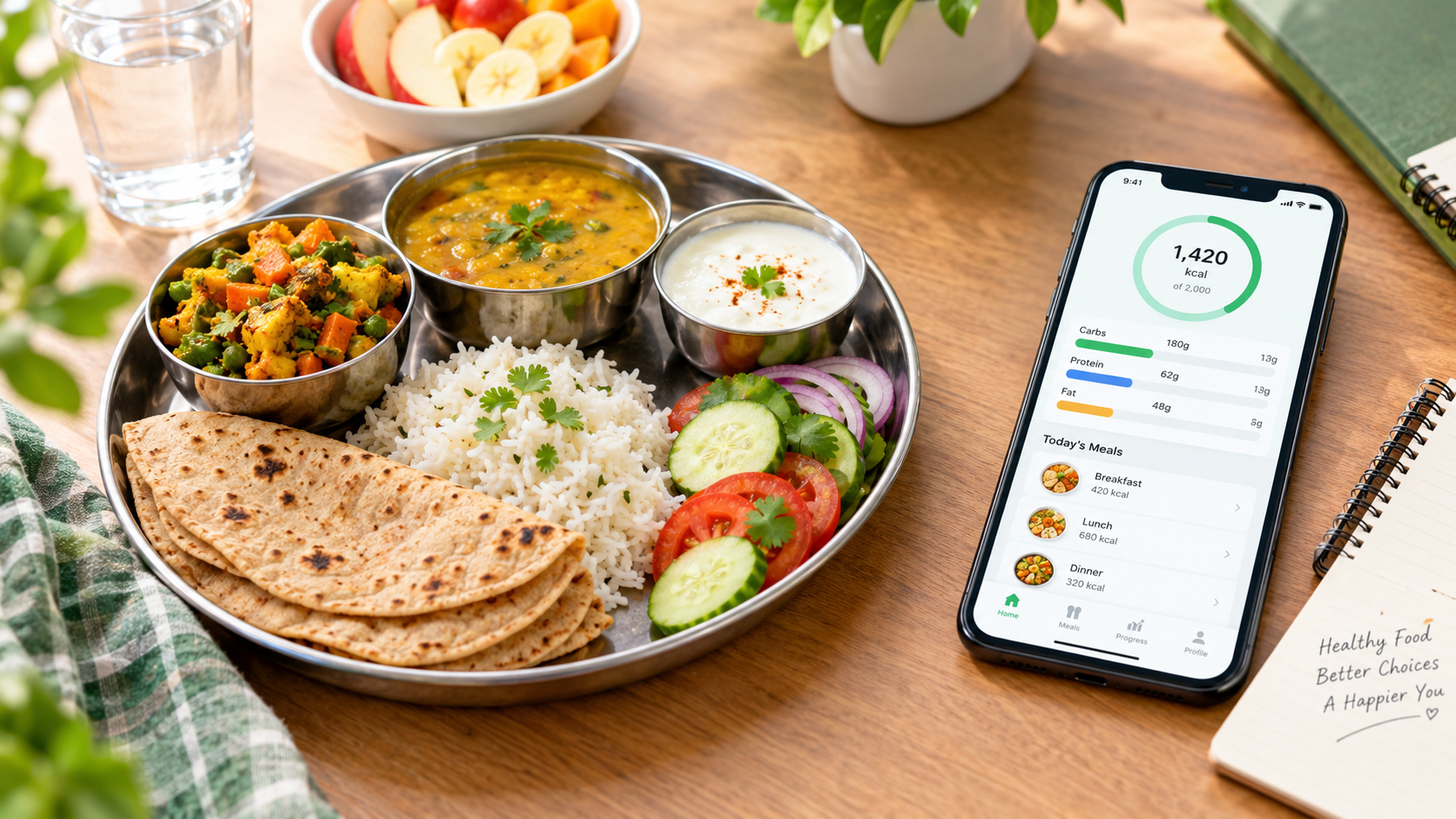
Have you ever wondered how many calories you should eat every day? Perhaps you want to lose weight, maintain your current weight, or simply understand your eating habits better.
The answer depends on more than just your age or whether you are male or female. Your body size, physical activity, daily routine, health status, and personal goals can all affect how much energy you need.
For Indians, understanding calorie intake also means looking at familiar foods such as roti, rice, dal, sabzi, dosa, idli, poha, and homemade curries. These foods can all fit into a balanced diet. The important part is understanding portions, ingredients, cooking methods, and your overall eating pattern.
In this guide, you will learn what daily calorie needs mean, which factors influence them, how weight goals affect calorie intake, and how to start tracking the food you eat.
What Are Calories?
Calories are a unit of energy. Your body uses energy to perform essential functions such as breathing, maintaining body temperature, circulating blood, digesting food, walking, working, and exercising.
Food and drinks provide this energy. When you see calorie information on food packaging or a nutrition label, it is usually expressed in kilocalories, written as kcal. In everyday conversation, people commonly call these simply calories.
Your body needs enough energy to function properly. Consistently eating more energy than your body uses can contribute to weight gain over time, while consistently eating less can lead to weight loss.
However, calories are only one part of nutrition. The quality of your food also matters because your body needs protein, fats, carbohydrates, vitamins, minerals, fibre, and adequate fluids.
How Many Calories Should You Eat Per Day?
There is no single calorie target that is right for every person.
For example, the energy needs of someone who spends most of the day sitting may differ from those of someone who walks extensively for work or exercises regularly.
The UK National Health Service uses approximately 2,000 calories per day for women and 2,500 for men as general population averages. These figures are broad examples, not personalized recommendations for every Indian adult.
Indian dietary reference values also vary according to body weight and activity level. The Indian Council of Medical Research and its National Institute of Nutrition publish guidance on energy and nutrient requirements for the Indian population.
For that reason, do not automatically assume that a standard online calorie number is the right target for you.
What affects your daily calorie needs?
Several factors can influence your requirements:
- Age: Energy needs can change as you grow older.
- Body size: Height, weight, and body composition affect how much energy your body uses.
- Physical activity: Walking, household work, exercise, and physically demanding jobs can increase energy expenditure.
- Personal goals: Maintaining weight, losing weight, and gaining weight require different approaches.
- Health and life stage: Certain medical conditions, pregnancy, breastfeeding, and recovery from illness can change nutritional needs.
Your calorie needs can also change over time. A target that was suitable at one stage of life may not remain suitable forever.
Calories for Weight Loss, Maintenance, and Weight Gain
Your goal matters when deciding how to approach your daily calorie intake.
1. If you want to lose weight
Weight loss generally requires a sustained energy deficit, which means consuming less energy than your body uses over time.
This does not mean you should stop eating rice, eliminate roti, skip dinner, or follow an extremely restrictive diet.
Instead, start by understanding your usual eating habits. You may discover that portions, cooking oil, sugary drinks, frequent snacks, or restaurant meals contribute more energy than you realized.
Practical changes can include measuring cooking oil more consistently, adjusting portions where appropriate, eating more vegetables, including protein-rich foods, and choosing water instead of sugary drinks more often.
Avoid making drastic reductions in food intake without professional guidance. Very restrictive diets can make it difficult to meet your nutritional needs and may cause fatigue, hunger, and other problems.
2. If you want to maintain your weight
Weight maintenance generally means consuming an amount of energy that is reasonably close to what your body uses over time.
Your weight will naturally fluctuate from day to day because of factors such as hydration, digestion, and other changes. One day's weight or calorie intake does not tell the whole story.
Tracking your meals for a short period can help you understand your typical portions and eating patterns. You can then make adjustments if needed rather than changing your diet based on a single meal.
3. If you want to gain weight
Weight gain generally requires consuming more energy than your body uses over time.
For a healthier approach, focus on regular balanced meals and nutrient-rich foods rather than relying entirely on sweets, fried snacks, or sugary drinks.
Depending on your dietary preferences, useful options may include milk or curd, paneer, eggs, dal, beans, soy foods, nuts, seeds, and other protein-containing foods. Combining adequate nutrition with suitable resistance exercise may also be helpful for people aiming to build muscle.
If you are unintentionally losing weight or struggling to gain weight, consult a qualified healthcare professional to investigate possible causes.
How to Understand Calories in Everyday Indian Food
Indian meals often contain a combination of grains, pulses, vegetables, dairy products, oils, spices, and other ingredients. The calorie content can change considerably depending on portion size and preparation.
Here are some common examples to help you understand what to look for.
| Food | What affects its calorie content? |
|---|---|
| Roti or chapati | Size, flour quantity, and added ghee or oil |
| Cooked rice | Portion size and the amount served |
| Dal | Lentil quantity, serving size, and tadka oil or ghee |
| Sabzi | Vegetables used, portion size, and cooking oil |
| Poha or upma | Portion size, peanuts, oil, and other additions |
| Idli | Size, batter proportions, and number of pieces |
| Dosa | Size, batter quantity, and oil used on the pan |
| Paneer curry | Paneer quantity, gravy ingredients, cream, and oil |
| Chai or coffee | Milk quantity and added sugar |
| Packaged snacks | Serving size and the nutrition information on the label |
These are not fixed calorie values. A small homemade roti and a large restaurant roti can contain different amounts of energy. Likewise, two bowls of dal may have different calorie contents because of differences in ingredients and cooking methods.
For better estimates, consider the actual portion you ate and how the food was prepared.
Why Cooking Oil and Portion Sizes Matter
Two details can make a significant difference when estimating calories: portion size and added fat.
Pay attention to cooking oil
Oil is energy-dense, so the amount used in cooking affects the calorie content of a meal.
For example, a lightly cooked vegetable dish may have a different calorie content from the same vegetables prepared with a generous amount of oil.
You do not need to eliminate oil completely. Instead, try to estimate the amount used in the recipe and, where practical, distribute that estimate across the number of servings prepared.
Be consistent with portions
Consider the difference between a small bowl of rice and a large serving. The food is the same, but the quantity is not.
You can improve your estimates by using consistent bowls, cups, or serving spoons at home. A kitchen scale can provide more precise measurements when you need them.
Remember that measuring every ingredient perfectly is not necessary for everyone. The goal is to develop a useful understanding of your eating habits rather than making every meal stressful.
How to Start Tracking Your Daily Calories
Calorie tracking can help you become more aware of your food choices, portion sizes, and meal patterns.
Here is a simple way to begin.
Step 1: Record what you normally eat
For a few days, note your regular meals, snacks, and drinks. Include foods such as chai with sugar, biscuits, cooking oil, chutneys, and small snacks that are easy to overlook.
You do not need to change your diet immediately. First, try to understand your normal routine.
Step 2: Estimate realistic portions
Record how much you actually ate rather than how much you intended to eat.
For example, distinguish between one roti and three rotis, or a small serving of rice and a large serving.
When a recipe contains several ingredients, include the ingredients that meaningfully affect its overall nutrition.
Step 3: Review the entire day
Look at your meals together instead of judging individual foods in isolation.
A meal containing rice is not automatically unhealthy, and a food with a low calorie count is not automatically nutritious. Consider variety, protein, fibre, vegetables, and the overall balance of your diet.
Step 4: Use your observations to make practical changes
Once you understand your typical intake, decide whether any changes are appropriate for your goal.
You might adjust a portion, include more protein-rich foods, reduce sugary drinks, or plan snacks more thoughtfully. Choose changes that are realistic for your routine and food preferences.
Step 5: Focus on consistency
An occasional meal that differs from your plan does not undo your progress.
Build a routine you can maintain. If calorie tracking causes anxiety, encourages extreme restriction, or becomes obsessive, stop and seek appropriate professional support.
Can You Estimate Calories From a Food Photo?
A food photo can make meal logging more convenient, especially when you eat homemade Indian dishes or meals with several components.
However, an image does not reveal every detail. It may not show the exact weight of the food, the amount of oil used, hidden ingredients, or the recipe's proportions.
That means any photo-based calorie estimate should be treated as an approximation rather than an exact measurement.
For a more useful estimate, provide clear images, select the correct food when prompted, check the portion size, and correct the result when you know more about the ingredients.
Track your meals with NourishCal
NourishCal helps make food tracking more convenient by letting you explore calorie estimates for everyday meals.
You can use your food-tracking routine to become more aware of what you eat and how portions, ingredients, and preparation methods influence your intake.
Start here: Explore NourishCal
Remember that a tracking tool supports your understanding of food; it does not replace a qualified dietitian or healthcare professional.
Common Calorie-Tracking Mistakes to Avoid
If you are new to calorie tracking, watch out for these common mistakes.
Ignoring drinks and snacks: Sugar in chai, sweetened beverages, biscuits, and small snacks can contribute to your total intake.
Using the same estimate for every recipe: Homemade and restaurant versions of the same dish may differ in portion size, oil, and ingredients.
Assuming food photos are exact: Photo-based estimates can be helpful, but they may miss hidden ingredients and serving weights.
Focusing only on calories: Protein, fibre, vitamins, minerals, and overall food variety matter too.
Trying to lose weight as quickly as possible: Extreme restriction can be difficult to sustain and may compromise nutrition.
Comparing your intake with someone else's: People have different energy needs. A friend's calorie target is not automatically suitable for you.
Changing your diet based on one day's results: Look at longer-term patterns rather than reacting to every daily fluctuation.
Frequently Asked Questions
How many calories should an Indian adult eat daily?
There is no single target for all Indian adults. Calorie needs vary with body size, age, activity, health, and personal circumstances. ICMR-NIN guidance is a useful reference for Indian dietary requirements, but individual needs can differ.
Can I eat rice and roti while trying to lose weight?
Yes. Rice and roti can fit into a balanced diet. Portion size, the foods served alongside them, and your overall energy intake are more useful considerations than automatically eliminating either food.
Does skipping meals help reduce calorie intake?
Skipping a meal may reduce your intake on a particular day, but it is not necessary for weight management. Some people become very hungry later or find it harder to maintain balanced eating habits. Choose a meal routine that works for you.
Are homemade meals always lower in calories than restaurant meals?
Not necessarily. Homemade meals can make it easier to control ingredients and portions, but their calorie content still depends on how they are prepared. Restaurant dishes may contain different amounts of oil, butter, cream, or other ingredients.
Can I trust AI calorie estimates from food photos?
Use them as estimates, not exact measurements. Food images cannot reliably reveal all ingredients, preparation methods, or exact serving weights. Review the result and correct it when you have better information.
Should I follow a very low-calorie diet to lose weight faster?
Do not begin a very low-calorie diet without appropriate medical supervision. Severe restriction can create nutritional risks and is not a suitable long-term strategy for most people.
How long should I track calories?
You can begin with a short period of consistent tracking to understand your eating habits. Whether longer-term tracking is useful depends on your goals, health, and how you feel about the process. It should support a healthy relationship with food, not create unnecessary stress.
Final Thoughts
Understanding your daily calorie needs starts with learning how your body uses energy and becoming more aware of what you eat.
For Indian meals, pay attention to serving sizes, cooking oil, recipe differences, drinks, and snacks. Build balanced meals, make gradual changes where appropriate, and avoid extreme dieting.
Most importantly, remember that calorie needs are individual. General guidelines and tracking tools can help you learn, but personalized nutrition advice may be necessary when your health or circumstances require it.
Ready to understand your meals better? Visit NourishCal and make food tracking part of a more informed approach to nutrition.
Sources and Further Reading
- ICMR–National Institute of Nutrition: Dietary Guidelines for Indians
- ICMR–National Institute of Nutrition: Official website and nutrition resources
- NHS: Understanding calories
Disclaimer
This article is for general educational purposes only and is not a substitute for medical advice, diagnosis, or individualized nutrition guidance. Calorie requirements vary between individuals. Consult a qualified healthcare professional or registered dietitian before making significant dietary changes, especially if you have a medical condition, are pregnant or breastfeeding, are under 18, or have a history of disordered eating.
#Daily Calories#Calorie Needs#Indian Diet#Weight Management#Nutrition#Calorie Tracking