
Nutrition & Healthy Eating
How to Build a Balanced Indian Meal: A Simple Guide to Protein, Carbs and Healthy Fats
A simple guide to balancing everyday Indian meals without giving up your favourite foods.
NourishCal · Oct 31, 2026 · 6 min read
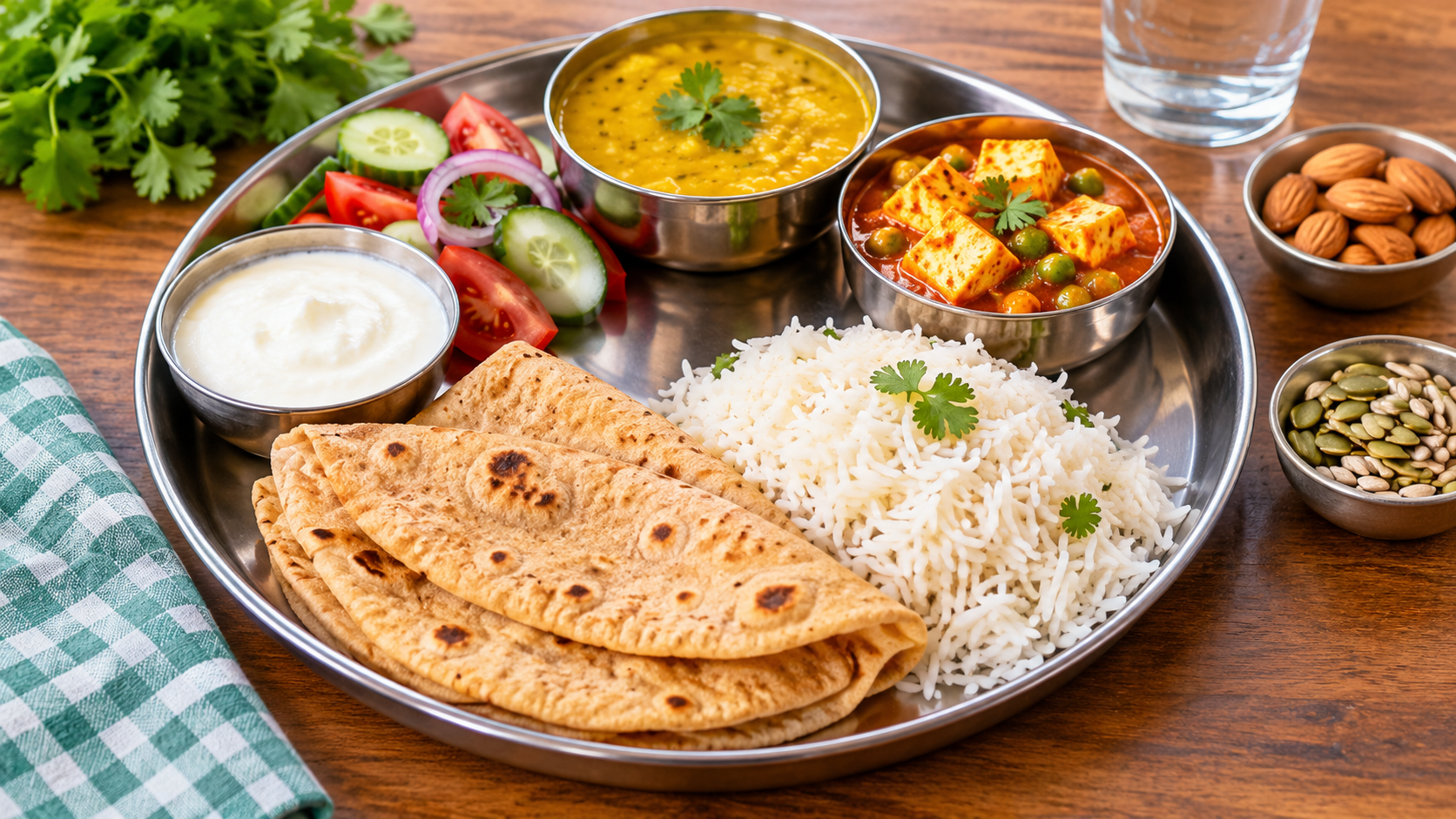
Eating healthy doesn't mean giving up your favourite Indian foods. You don't need expensive ingredients, complicated recipes, or a completely different diet to improve your eating habits.
A balanced meal can be made with everyday foods such as roti, rice, dal, vegetables, curd, paneer, eggs, fish, and chicken.
The secret is understanding how to balance different food groups and eat portions that suit your body's needs.
In this guide, you'll learn how to build a balanced Indian meal, get enough protein, manage carbohydrates, and make better food choices without giving up the foods you enjoy.
1. What Does a Balanced Meal Actually Mean?
A balanced meal provides your body with different nutrients it needs to function properly.
The main components are:
- Protein: Helps build and maintain muscles and supports many important body functions.
- Carbohydrates: Provide energy for your daily activities.
- Healthy fats: Support hormone production and help your body absorb certain vitamins.
- Fibre: Supports digestion and helps you feel satisfied.
- Vitamins and minerals: Support overall health and normal body functions.
You don't need to calculate every nutrient perfectly at every meal. Instead, aim for variety and balance throughout the day.
2. Use the Simple Plate Method
One of the easiest ways to create a balanced meal is to divide your plate into sections.
A practical starting point is:
- Half your plate: Vegetables and salad.
- One-quarter: Protein-rich foods.
- One-quarter: Rice, roti, or other carbohydrate-rich foods.
You can also include a small portion of healthy fats, such as nuts, seeds, or a little cooking oil.
This is a flexible visual guide, not a strict rule. Your portions may need to change depending on your activity level, appetite, age, and personal nutrition goals.
3. Choose Protein-Rich Indian Foods
Protein is an important part of a balanced diet, but many everyday meals contain more carbohydrates than protein.
Here are some easy protein options:
Vegetarian protein sources
- Dal and lentils
- Chickpeas and rajma
- Paneer
- Tofu
- Soybeans
- Greek yoghurt or high-protein curd
- Milk
Non-vegetarian protein sources
- Eggs
- Chicken
- Fish
- Prawns
- Lean meat
For example, instead of eating only rice and potato curry, you could add dal, curd, paneer, or eggs to make the meal more balanced.
Try including a protein source in each main meal.
4. Don't Be Afraid of Rice and Roti
Rice and roti are common parts of Indian meals. You don't have to eliminate them to eat healthily.
Carbohydrates are an important energy source. What matters is the overall quantity and what you eat alongside them.
Some practical ideas:
- Combine rice with dal and vegetables.
- Eat roti with paneer, dal, or chicken curry.
- Try brown rice or millets sometimes for variety.
- Avoid making your entire meal mainly rice, roti, or other starches.
Remember, brown rice and millets are not automatically better for every person. Choose foods you enjoy and can include consistently.
5. Add More Vegetables and Fibre
Vegetables provide fibre, vitamins, minerals, and variety.
Try including different coloured vegetables in your meals, such as:
- Spinach
- Carrots
- Cucumber
- Tomatoes
- Beans
- Cauliflower
- Cabbage
- Pumpkin
- Broccoli
You can prepare them as sabzi, salads, soups, or lightly cooked side dishes.
Fibre also comes from fruits, beans, lentils, oats, nuts, and whole grains.
If you're increasing your fibre intake, do it gradually and drink enough water.
6. Include Healthy Fats in Reasonable Portions
Fat is not something you need to avoid completely.
Foods such as nuts, seeds, peanuts, and certain cooking oils can provide useful fats.
Try including:
- A small handful of almonds or walnuts.
- Flaxseeds or chia seeds.
- Peanuts.
- Moderate amounts of cooking oil.
- Fish that naturally contains omega-3 fats.
Even healthy fats are energy-dense, so portion sizes matter.
7. Example of a Balanced Indian Daily Meal Plan
Here is a simple example of how you might structure your meals.
| Meal | Example |
|---|---|
| Breakfast | 2 eggs or paneer bhurji with whole-wheat toast |
| Mid-morning | One seasonal fruit |
| Lunch | Rice or 2 rotis, dal, vegetable sabzi, curd and salad |
| Evening snack | Roasted chana or yoghurt |
| Dinner | Roti, paneer or chicken curry, and cooked vegetables |
This is only an example, not a personalised diet plan. Adjust the food choices and portions according to your preferences, appetite, and nutrition requirements.
8. Common Mistakes to Avoid
Even when people try to eat healthy, a few common habits can make balanced eating difficult.
Mistake 1: Eating only salads
Salads can be nutritious, but a meal containing only vegetables may not provide enough protein or energy.
Add foods such as chickpeas, paneer, eggs, tofu, or chicken.
Mistake 2: Avoiding all carbohydrates
Removing rice, roti, and other carbohydrate sources is not necessary for most people.
Focus on appropriate portions and balanced combinations.
Mistake 3: Forgetting protein
A meal with rice, vegetables, and a small amount of gravy may contain less protein than you need.
Include dal, beans, dairy, eggs, fish, or other protein-rich foods.
Mistake 4: Drinking too many sugary beverages
Regularly drinking sweetened tea, soft drinks, packaged juices, and other sugary beverages can add calories without making you feel as full as solid food.
Choose water more often and enjoy sweet drinks in moderation.
Mistake 5: Following someone else's diet
Your nutrition needs are not necessarily the same as your friend's or a fitness influencer's.
Your food portions should reflect your own body, activity, preferences, and goals.
9. How NourishCal Can Help You Understand Your Meals
Sometimes, it is difficult to know how many calories, proteins, carbohydrates, and fats are in a homemade meal.
This is where NourishCal can make everyday food tracking easier.
With NourishCal, you can use AI-powered food scanning to estimate the nutritional information of your meals.
You can use it to:
- Check estimated calories in your food.
- Understand protein, carbohydrate, and fat content.
- Keep track of your daily food intake.
- Compare meals and become more aware of your eating habits.
- Monitor your progress towards your nutrition goals.
For homemade meals, remember that the results are estimates. Ingredients, cooking oil, portion sizes, and preparation methods can affect the actual nutritional values.
Ready to understand what's on your plate? Try NourishCal and make food tracking a little easier.
10. Final Thoughts
Healthy eating doesn't have to be complicated.
You can build balanced meals using familiar foods such as rice, roti, dal, vegetables, curd, eggs, paneer, and fish.
Start with small changes. Add a protein source to your meals, include more vegetables, pay attention to portions, and choose a variety of foods.
Most importantly, choose an eating routine that you can maintain over time.
A healthy diet is not about eating perfectly every day. It is about making better choices consistently.
Track your meals, understand your nutrition, and take one step towards better eating with NourishCal.
#Indian Diet#Balanced Diet#Healthy Eating#Protein Foods#Nutrition Tips#Meal Planning#Indian Food